How Persian carpets weave time into art
TEHRAN – Persian carpets are often introduced through familiar ideas: tradition, craftsmanship, heritage, and identity. While these remain essential, they do not fully explain why these objects continue to resonate, specifically with contemporary global audience increasingly attentive to timeless art.
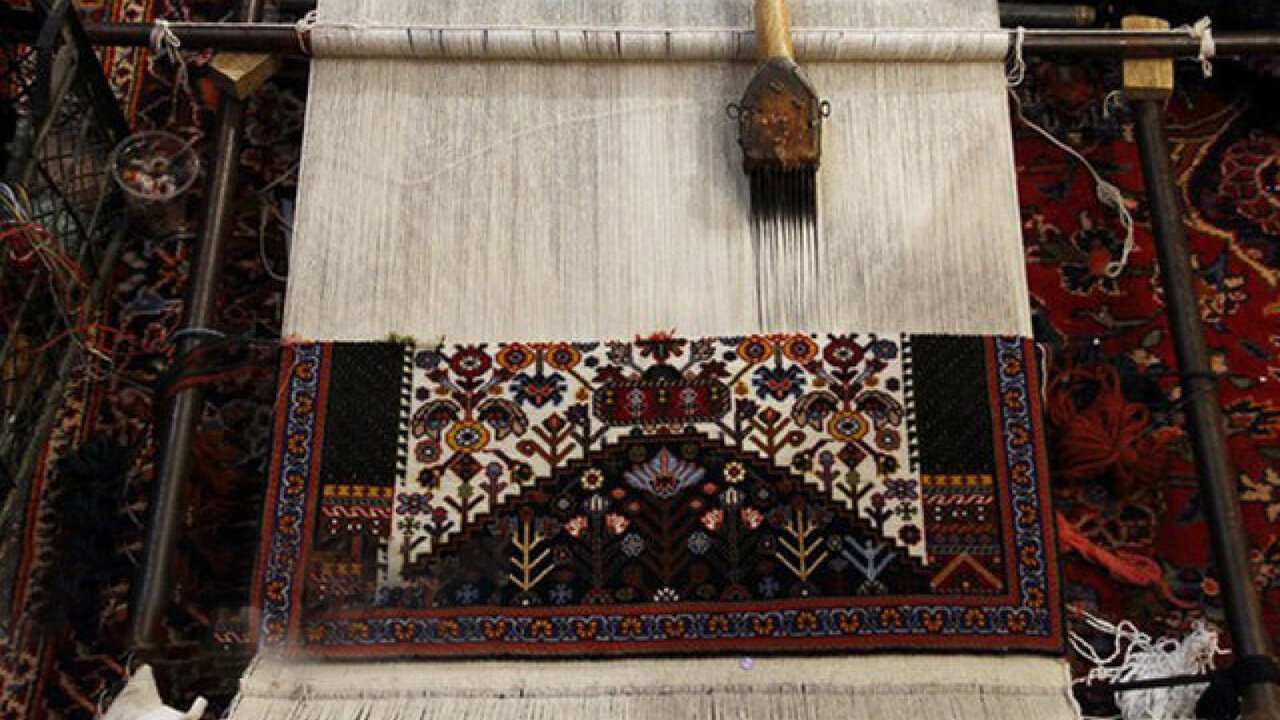
What distinguishes handwoven Persian carpet is not simply the time required to produce it, but the way time becomes integral to its structure. Unlike industrial production, each knot registers a moment of attention. These carpets are where time is captured.
This condition is not unique to Iran. Textile traditions across the world, from Ottoman court carpets to Chinese silk weaving and European tapestry, also embody extended artists. Yet Persian carpets offer a particularly legible range of ways in which time can be visually organized.
Persian carpets do not exist outside time; It is not about singular notion of timelessness, but a set of distinct temporal experiences: spiral, continuous, and rhythmic. rather, they engage with it through multiple visual strategies.
Different carpets operate through a different mindset. Consider the 16th century Ardabil Carpet. Its central medallion draws the eye inward, creating a moment of visual pause. The composition feels concentrated and composed, not unlike large-scale European tapestries produced in workshops such as “Gobelins” where attention is similarly directed and sustained. Time, in this instance, appears static. In Arabesque designs, there is no fixed beginning or end. Lines extend, return, and continue, allowing the eyes to move over without destination, just like cloud or wave patterns in East Asia; Surfaces resist linear reading.
Different carpets narrate different stories. “Hunting 16th century’s carpet” introduces eternal movements. Riders and animals appear in a scene, with repetitive, continuous and unresolved activity. A similar cyclical quality can be observed in certain Central Asian textiles, where figurative elements circulate without a fixed endpoint. Re-known “Polonaise carpets”, which also in fact belongs to Safavid dynasty, woven with silk and metallic threads, interact with light in ways that shift throughout the day. Another material, another dimension. Related effects can be found in Italian Renaissance textiles. On the other hand, “Geometric carpets” and “Tribal carpets” present more measured rhythms. Repeated motifs suggest order, still subtle variations prevent complete uniformity. Time here is structured, though never rigid.
In a cultural moment shaped by speed, optimization, and repetition, Persian carpets do not simply represent the past. They propose an alternative relationship to time. Timelessness, in this sense, is not defined by permanence, but by the ways in which time is held and experienced.
AM
Leave a Comment